 We’re going into autumn now and we have taken the honey off our hives. Our bees are preparing for winter. Nationally the honey harvest has been quite poor; unsettled weather over spring and summer has affected plants flowering and the behaviour of foraging bees, resulting in significantly less honey for many beekeepers; although there are certain apiaries that have done well. Beekeepers are now checking their bees for varroa mites and wintering down their bees to ensure strong healthy hives in the spring.
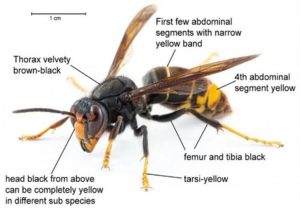
The yellow legged hornet (YLH) season should now be slowing down too. The YLH lifecycle is similar to the German and common wasps: the mated queens hibernate over winter and emerge in the spring to build a small nest and raise a few workers; this nest grows throughout the summer with many workers and in early autumn gynes (fertile females) and drones (males) are produced; these gynes mate and then go off and hibernate over winter. The difference between YLHs and wasps is that in late summer they will produce a secondary nest high up in the trees; the queen and workers will move between both nests.
Every YLH queen found so far has been genetically tested and is the offspring of a single queen; indicating that there was only one mated queen that started this incursion. We are at the critical stage where we must destroy all nests before gynes emerge, it is getting harder to find the last few nests but our dedicated teams have gained much experience and have honed their detection and tracking skills. Once a nest is found the team that I’m on swoop in and treat the nest, it is then collected 24 hours later after any stray hornets return to the nest and get killed by the residual horneticidal powder. There are quite a few local beekeepers who are part of the hornet response team - they are well aware of the risks and dangers of the YLH becoming established. The positive response and support of locals has been phenomenal. Everyone in New Zealand, especially in and around Auckland should look for hornet activity and better yet put out a suitable trap (check out the MPI website for up to date information and trap making instructions) to make sure that they haven’t accidentally been transported out of Zone A – Glenfield and Birkdale. The response is still ongoing, and despite some misinformation and negative opinions on social media, the team are totally engaged and fully supported by biosecurity NZ; and are confident that we will stop the YLH becoming established in New Zealand.
Ken Brown
Apiculture Tutor, Land Based Training Ltd
President Auckland Beekeepers Club
